
ABOUT Right to Information (RTI)

Forms Details Similer to ABOUT Right to Information (RTI) :
What is RTI Act and When Did RTI Begin?
The Right to Information (RTI) Act, 2005 is a landmark Indian law that empowers citizens to access information under the control of public authorities. It aims to promote transparency and accountability in government operations while helping to contain corruption.The formal national regime in India began in 2005, but its roots and international precedents date back much further:
Do you know What does RTI stand for?
In governance, RTI stands for Right to Information. It refers to the legal right of citizens to access information held by public authorities to ensure transparency and accountability.RTI stands for the Right to Information Act. The meaning of RTI 2005 is inherent in its full name, which is the Right to Information. According to the RTI Act India, or the Right to Information Act, every citizen of India has the right to obtain information from the government, either online or through other means. This includes departments and offices of both the state and central governments of India.
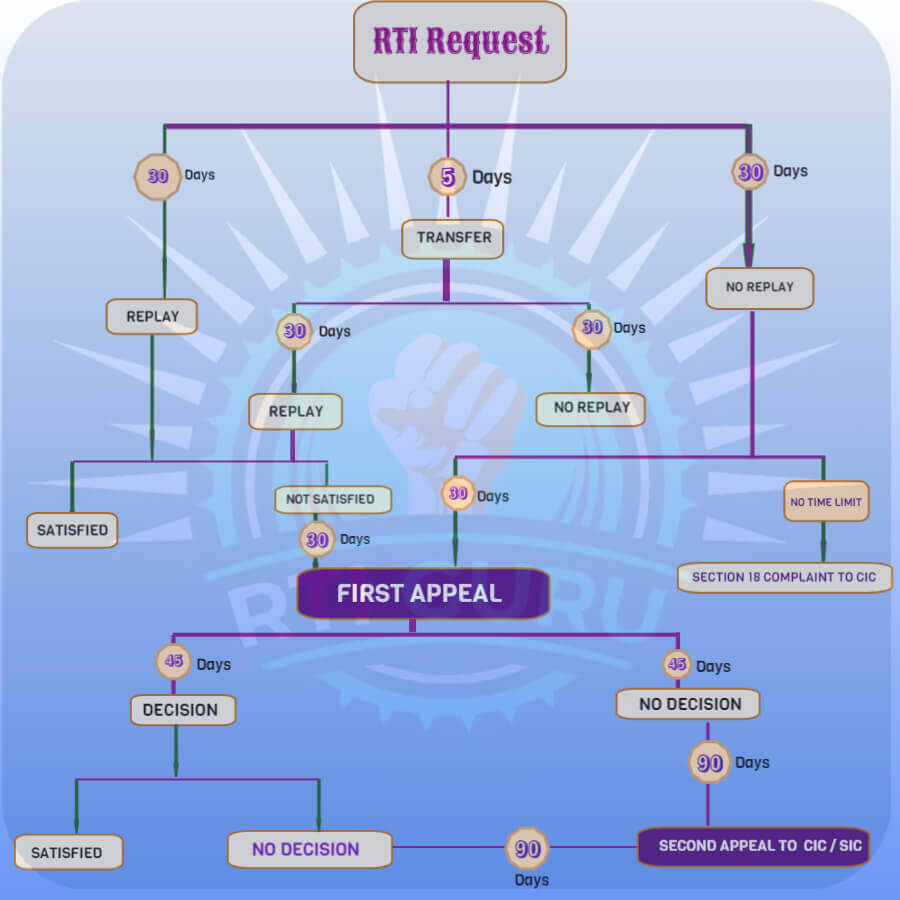
Under the RTI Act, any citizen can request information from any public or government authority, and the authority is required to respond to the application within 30 days.
The main objective of the RTI is to empower you by bringing transparency to government functioning and to fight against corruption. It was enacted by an Act of the Parliament of India on June 15, 2005. This Act came into force on October 12, 2005, and since then, it has been implemented to provide information to millions of Indian citizens. Under the Right to Information Act, 2005, any citizen of India can seek any kind of information from the government.
Governance and Law: Right to Information
- Purpose: Empowers citizens to seek information from government bodies, promoting accountability and transparency.
- Key Rights: Includes inspecting documents, taking notes, getting certified copies, and accessing information in electronic form.
- Governing Law: The Right to Information Act, 2005.
How to File RTI?
Every Indian ought to know about RTI filing. The procedure of the RTI file is very simple and stress-free. Write the application or get it typed your choice on a paper in English, Hindi, and the official language of the state. filing a Right to Information (RTI) application in India remains a straightforward process that can be completed either online or offline:
- Address RTI Application to the Public Information Officer (PIO) of the concerned department.
- Ask precise questions and make sure that they are clear and complete, and not puzzling whatever.
- Write your full name, contact details, and address, where you want the information or reply to your RTI to be sent.
- Get a photocopy of the application for your evidence.
If you transfer the application by post, it's sensible to send it through registered post, as then you will have an acknowledgment of your request's release. If you're submitting the application to the PIO in person, remember to take an acknowledgment, This user manual details the process for submitting RTI requests and appeals through the online portal, including fee payments and status tracking.
How to File RTI online?
Presently, Central and a few state government sections have the ability for filling RTI online. But there are many independent websites that allow you to file your application online. They charge you a small amount, for which they have, draft your application, and send it to the applicant section. This is excellent for sending a Right to Information without having to be troubled about the details. we can file your RTIs everywhere in India. just in a 5-minute process time! Our specialists have information regarding RTI filing for thousands of government offices diagonally the country.
Right to Information Act Online Application Form to File RTI Online
The application process for filing an RTI involves both offline as well as online options but some states do not allow online options as of now.
Don't Worry Here is the Good News!
You can file RTI through our RTI online web portal. RTIGuru RTI online portal help in filing RTI in 5 minutes.There are also different rules for different states and departments for which the RTI needs to be filed. But, at RTIGuru we simplify the whole process to make it easy for you to file RTI online.
We follow a simple Online RTI Process that makes you enable file RTI Online easily. Our Online RTI Process took only 5 minutes to file an RTI.
Which Government Organizations are Required To Give RTI Information Under RTI Act or Suchna Ka Adhikar Online?
Every government agency, whether they are under a state government or the Centre, comes under RTI Act.
For example, Government departments, Municipal Corporations, Ministries at the State as well as the Central level, Public Sector Units, magistrates, Government Schools, Government-owned Companies, Road Authorities Government Universities, Provident Fund department, Works Departments, etc.
The list is quite a comprehensive one. You can ask a government how much money is being spent on the renewal of its ministers' bungalows and what their telephone bill or fuel expenditure is. Moreover, you can ask what amount was spent on MLA's, MP's' overseas tours. You can ask how much of the allocated money your designated representatives have consumed on improving their population besides this you are entitled to ask for even a divide of the amount spent, project-wise.
This RTI information is available because it is the taxpayer's money that is being exhausted here. Few officers and departments make online RTI responses available to the public. You can see them on particular websites.
- Empowerment: Gives citizens power to question secrecy and hold government accountable.
- Transparency: Aims to bring openness to the workings of public bodies.
- Accountability: Ensures government functions and decisions are accessible to the public
- File an Application: Submit a request (physical or online) to a public authority asking for specific information.
- Information Disclosure: The authority must provide the information within a set timeframe, or else face appeal.
- Appeals: If unsatisfied, you can appeal to senior officers or Information Commissions
These organizations are exempted from RTI Act, Furthermore related to corruption and Human Rights Violation is not exempted. You cannot ask for someone's personal information or something which is a risk for national security.
Right To Information Act Online to solve all problems. You can use the Right To Information Act Online or RTI Online to get any information from the government authorities.
How to Use RTI to Solve Personal Problems?
Be it boundless delay in dispatch of passport or police uncertainty in giving you a copy of FIR you may have filed, submit an RTI application asking meaningful questions. Highly possible this will be the beginning of the end of your despairs. For example, The release of the Aadhaar card, Pending income tax return, pension's release, withdrawal or transfer of PF, issuance of property documents, or driving license.
Using the RTI tool in any of these conditions or other cases concerning a government organization will guarantee you an executive response, based on which you can take things further if your problem is not solved. A citizen can ask the government official's reasons for the delay in government service requested.
For example, if you have applied for a Passport and it has not been distributed, then one can apply RTI with the following questions.
- Please give daily progress to complete my passport application.
- Please give names of officers with whom my application has been dishonest during this period.
- Kindly notify as per your citizen's charter in how many days I should have got my passport.

How to Solve Problems Using RTI?
- Delayed PF withdrawal
- Pending Income Tax return
- Delayed Aadhar card
- Delayed PF Transfer
- Delayed Passport
- Copies of answer sheets
- Delayed IRCTC Refund
- Status of FIR
- Conduct a social audit of government projects
- Property Documents Occupancy Certificate / Completion Certificate
- Delay in Scholarship
- Status of a complaint
- Status of EPF
- Which Social Problems can be solved using RTI
- how government project scheme implemented?
- Fix roads with pothole
- how MP/MLA spent the fund allocated?
How Powerful is RTI Act And How is RTI Different from other Anti-Corruption Laws?
When it comes to RTI, there are regulators on multiple levels to make sure the Act is followed in correspondence and strength. The Act has to work a carryout or expire approach, besides setting up a device to distribute information. Every government association is needed to sign up for one employee as a public information officer.
Once a department gets an RTI request, it is the legal responsibility of the PIO to deliver the information to the candidate within 30 days. Deteriorating to do so means, a financial fine can be obligatory on the PIO. The longer a PIO makes a candidate wait, the more the punishment levied on him or her. There have been instances where PIOs have been asked to cough up quantity in thousands of rupees as fine.
How Many Days Does it Take to Get RTI Response?
According to law, the RTI information should be given in 30 days. However, sometimes government records are mislaid or absent. Or the agency you've written to needs to organize with another section to offer you the information you would like. In such conditions, the information might take more than 30 days to reach your target. In such a case, the PIO concerned desires to send you a written warning about the possible obstruction and the reason. If he or she fails to do so and you don't obtain the info within 30 days, the penalty can be charged on the PIO if the matter is taken up with appellate organizations.
What is the Fee for Seeking Information Under the Right To Information Act 2005?
For central government departments firstly need to pay Rs. 10 with every RTI application. However, this mode of payment may vary from government to government. Whereas submitting an application individually, some associations accept cash while some do not. Some ask for Indian postal Some ask for Court Fee Stamp. When sending an RTI application by post, we can use an IPO court fee stamp of Rs. 10.
If you are looking for free RTI online then there is no way that you can file free RTI online. Because filing an RTI involves fees/cost.
Is RTI Act Different For Different States?
The central government has come up with an RTI act that is appropriate in all states apart from Jammu and Kashmir which has its own act very comparable to the central act. All state has a comprehensive central act with state exact rules which hold method of payment, rules on RTI fees, RTI application form, and sometimes a limit on a number of words or questions.
To get the right information you need to fill RTI form in the correct RTI format where you can put your RTI Query or RTI Complaint and address it to the central govt or state govt. or concerned department. Through the RTI Web portal (RTIGuru) you can file Online RTI India. Our RTI Web Portal allows you to file RTI very easily. File Online RTI India Now. You will get the RTI status online.